
MAY 2026
Published: May 2026
By: Danielle Burton
Category: Trade-In
If you’re planning to upgrade your vehicle or lower your monthly payments, trading in your car can be one of the fastest ways to turn your current vehicle into savings. But here’s the catch, not all trade-ins are created equal. From timing and vehicle condition to what you still owe, several factors can impact how much value you actually receive.
A car trade-in allows you to use the value of your current vehicle as a down payment toward another car. It’s convenient, often faster than selling privately, and can help reduce the overall cost of your next vehicle purchase. However, knowing when to trade in, how to negotiate, and what to expect can make a significant difference in how much you get back.
In this guide, we’ll break down how car trade-ins work in Canada, how dealerships determine your vehicle’s value, and what you can do to avoid common trade-in mistakes. Whether you’re trading in a leased car, still owe money on your loan, or have negative equity, you’ll learn smart strategies to help you maximize your value and make a confident decision.
In This Guide:
- 1. What Is a Trade-In and How Can It Help You Save on Your Next Car?
- 2. How to Trade In Your Car Without Getting Taken Advantage Of
- 3. How Dealers Really Calculate Your Car’s Trade-In Value
- 4. When Is the Best Time to Trade In Your Vehicle for Maximum Value?
- 5. Can You Trade In a Car With a Loan or Lease? Here’s What You Need to Know
- 6. Trading In a Car With Negative Equity: Smart Options to Consider
- 7. How to Prepare Your Car to Get Top Dollar on a Trade-In
- 8. Final Thoughts: Is Trading In Your Car Worth It?
- 9. Frequently Asked Questions About Trading In Your Car in Canada
What Is a Trade-In and How Can It Help You Save on Your Next Car?
A car trade-in is when you exchange your current vehicle at a dealership for credit toward another vehicle, reducing the amount you need to finance or pay upfront.
Instead of selling your car privately, you bring it to a dealer, where they assess its value based on factors like make, model, age, mileage, condition, and current market demand. That value is then applied directly to the price of your next car.
For example, if you’re buying a $25,000 vehicle and the dealer offers you $8,000 for your trade-in, you’ll only need to finance or pay the remaining $17,000. This can lower your monthly payments, reduce the total interest paid over time, and may even improve your chances of financing approval, especially if the trade-in lowers your loan-to-value ratio.
How Does a Trade-In Save You Money?
- Lower Loan Amount: A higher trade-in value means you borrow less money, resulting in lower monthly payments and less interest over time.
- Sales Tax Savings: In most provinces in Canada, you only pay sales tax on the difference between your new car price and your trade-in value. Using the example above, you would only pay tax on $17,000 instead of $25,000.
- No Need to Sell Privately: Selling a car privately takes time and effort. A trade-in allows you to skip the process and apply the value immediately toward your next vehicle.
Is It Always the Best Option?
Not always. Dealerships typically offer less than what you might get through a private sale, as they need to resell the vehicle and make a profit. However, the convenience, speed, and potential tax savings can often outweigh the difference, especially if your vehicle is in average condition or you want a simpler transaction.
Whether you’re downsizing, upgrading, or ready for a change, a trade-in can be a practical way to move forward without stretching your budget. The key is understanding your vehicle’s value, knowing your options, and being prepared to negotiate.
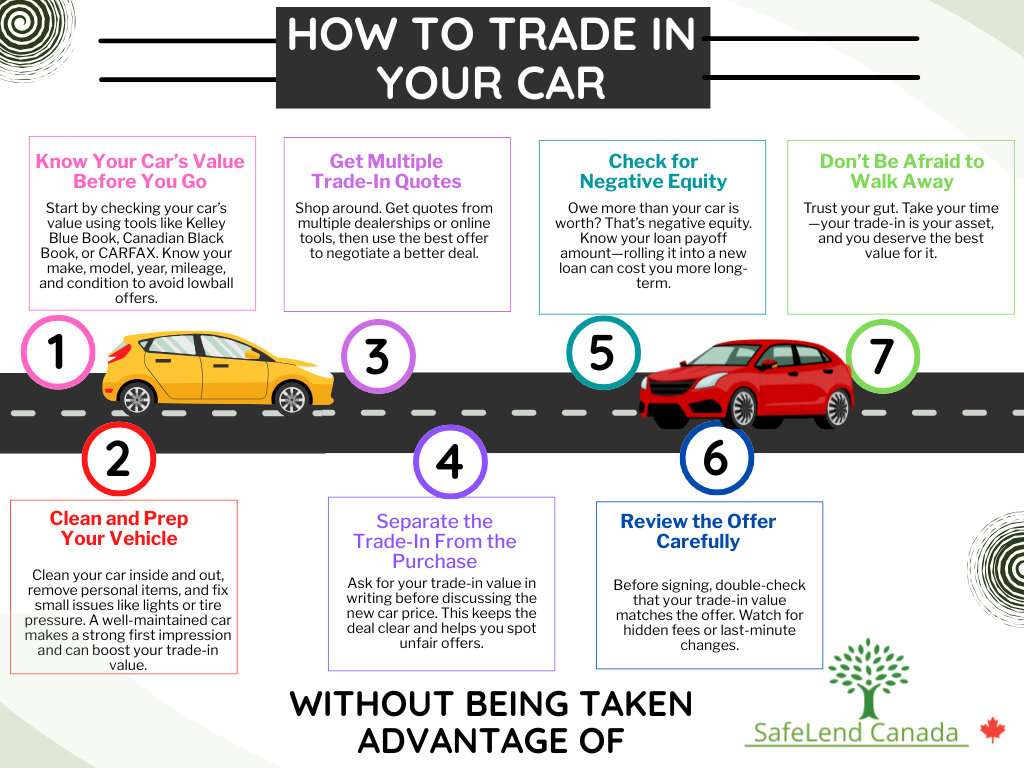
Step-by-Step: How to Trade In Your Car Without Getting Taken Advantage Of
Trading in your car involves a few key steps, and understanding the process ahead of time can help you maximize your value and avoid common mistakes.
Trading in your car can be a quick and convenient way to put money toward your next vehicle, but it’s also an area where some people leave hundreds or even thousands of dollars on the table. The key is knowing what to expect and how to prepare.
The Trade-In Process (Step-by-Step)
- Research Your Vehicle’s Value: Check tools like Canadian Black Book or compare listings to understand your car’s market range.
- Get Your Loan Payoff Amount (If Applicable): Know exactly what you owe before negotiating.
- Prepare Your Vehicle: Clean your car and fix minor issues to improve its presentation.
- Get Multiple Trade-In Quotes: Visit or request offers from more than one dealership.
- Negotiate Separately from Your Purchase: Keep the trade-in value separate from your new vehicle price to avoid confusion.
- Review the Final Offer Carefully: Ensure all numbers, including tax savings and payoff amounts, are clearly outlined.
By following these steps, you’ll stay in control of the process and avoid the most common mistakes people make when trading in their vehicles. A little preparation can go a long way toward securing a deal that works in your favour.
How Dealers Really Calculate Your Car’s Trade-In Value
Dealers calculate your car’s trade-in value using a combination of market data, vehicle condition, history reports, and resale potential, while also factoring in their profit margin.
When you walk into a dealership to trade in your car, you might wonder how they come up with a number so quickly. Is it fair, or just a rough estimate? In reality, dealerships follow a structured process, but not all of it works in your favour. Understanding how your car’s trade-in value is calculated can help you recognize a fair offer and avoid getting lowballed.
1. Market Demand and Inventory Needs
Dealers look at what’s currently selling in the used car market. If your vehicle is in high demand, like a reliable SUV or fuel-efficient sedan, it may receive a higher trade-in value. If the dealer already has similar inventory, your offer may be lower.
2. Vehicle Condition
The cleaner and better maintained your vehicle is, the more it’s worth. Dealers assess:
- Exterior and interior condition
- Tire wear
- Visible damage or rust
- Service history
- Signs of previous accidents
3. Year, Make, and Model
Some brands retain value better than others. Vehicles from manufacturers like Honda and Toyota often hold strong resale value due to reliability, while some luxury or niche vehicles may depreciate faster unless in exceptional condition.
4. Mileage
Lower mileage generally increases value, as it suggests less wear on key components. Higher mileage typically results in a lower trade-in offer.
5. Vehicle History Report
Dealers review reports from providers like CARFAX or AutoCheck to check for accidents, insurance claims, or ownership history. A clean report supports a higher value.
6. Mechanical Inspection
Dealers inspect the vehicle to ensure it is safe and roadworthy. Any required repairs are typically deducted from the trade-in offer.
7. Auction and Wholesale Pricing
Dealers often reference auction data and wholesale pricing tools to estimate resale value. If they cannot sell the vehicle on their lot, they need to ensure they can still make a profit through alternative channels.
Bottom Line: Dealers use a mix of data, inspection results, and market insights to determine your trade-in value, but profit is always part of the equation. That’s why it’s important to research your vehicle’s value in advance, prepare it properly, and compare multiple offers. The more informed you are, the stronger your position when negotiating a fair trade-in deal.
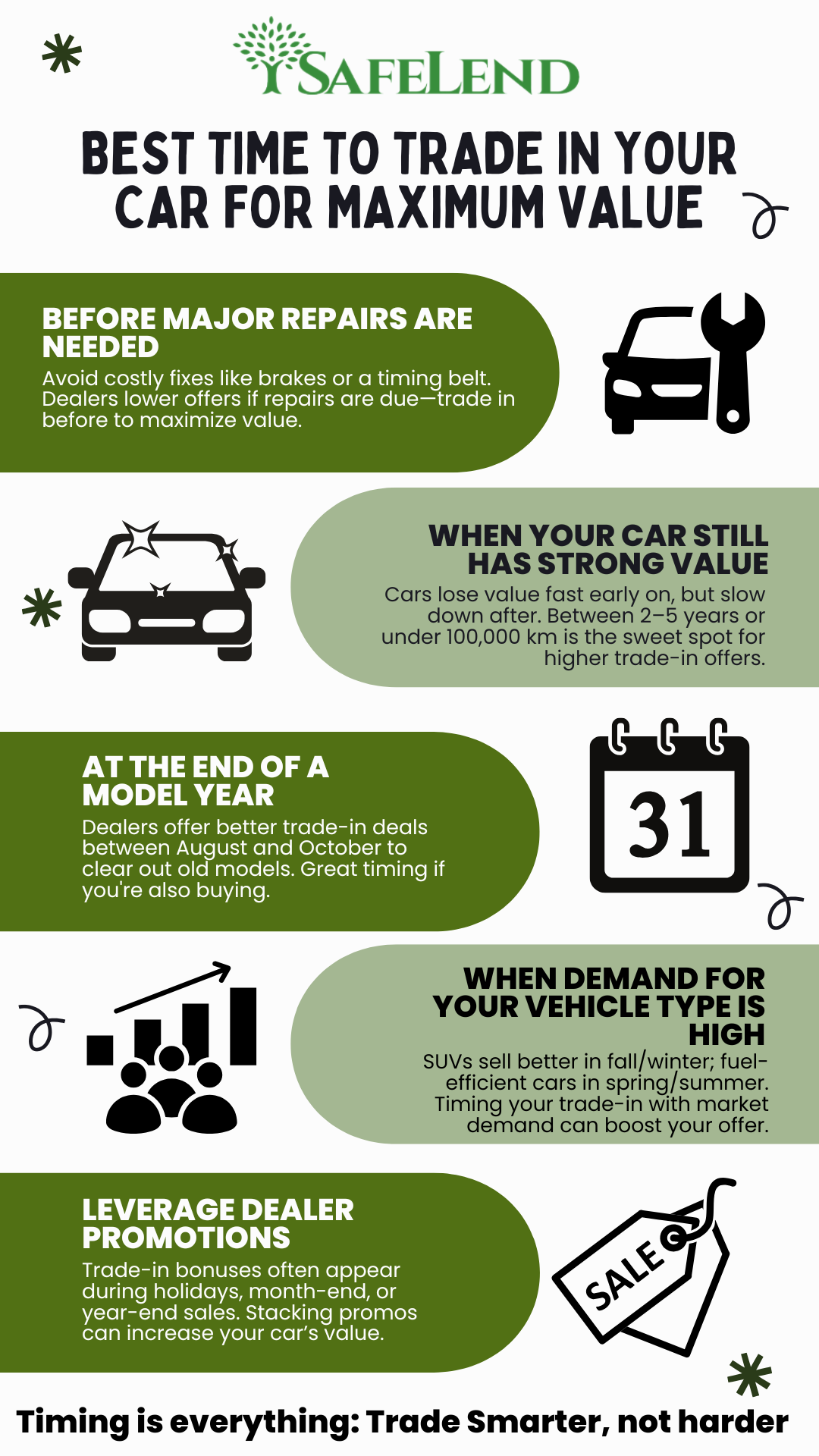
When Is the Best Time to Trade In Your Vehicle for Maximum Value?
The best time to trade in your vehicle is when it still holds strong market value, demand for your vehicle type is high, and you can avoid major repairs or negative equity.
Timing can make a significant difference. Like any market, vehicle values fluctuate based on supply, demand, seasonality, and overall condition. Knowing when to trade in can help you maximize your return and avoid unnecessary depreciation.
Trade-in timing is not just about your vehicle, it’s about market demand and how dealerships value inventory at that moment.
Key Factors That Impact Trade-In Timing
- Vehicle Age and Depreciation: Cars lose value fastest in the first few years. Trading in before major depreciation milestones can help preserve value.
- Mileage Thresholds: Vehicles approaching high mileage benchmarks, like 100,000 km, may see a drop in value.
- Seasonal Demand: SUVs and trucks often perform better in fall and winter, while fuel-efficient vehicles may be in higher demand during spring and summer.
- Market Conditions: Used vehicle demand, inventory shortages, and economic factors can all influence values.
- Upcoming Repairs: If your vehicle is nearing major repairs, like brakes or tires, it may be worth trading in before those costs reduce your offer.
The best time to trade in is when your vehicle still holds solid value, demand is high, and you can avoid major expenses or negative equity.
Can You Trade In a Car With a Loan or Lease? Here’s What You Need to Know
Yes, you can trade in a car with a loan or lease , but the dealer will compare your vehicle’s trade-in value to your remaining balance or buyout amount to determine your equity position.
Trading In a Car With a Loan
The dealership will determine your payoff amount and compare it to the trade-in value. One of two things happens:
You can trade in a vehicle even if you're still making payments, but the process works differently than trading in a car you fully own. Whether you're upgrading, improving your financing, or changing vehicles, understanding how this works can help you avoid unexpected costs.
- You Have Positive Equity: Your car is worth more than what you owe. This amount can be applied toward your next vehicle.
- You Have Negative Equity: Your car is worth less than what you owe. This amount is typically rolled into your new loan.
Quick Tip: Always request your trade-in value and loan payoff amount in writing before agreeing to anything. This ensures full transparency.
Trading In a Leased Vehicle
Leased vehicles can also be traded in, but the process involves a few additional steps. A lease is essentially a long-term agreement where you pay for the vehicle’s depreciation over time.
Here’s what to expect:
- Get a Lease Buyout Quote: This is the amount required to purchase your leased vehicle outright. You can find it in your lease agreement or by contacting your leasing company.
- Compare the Vehicle’s Current Value: If your vehicle is worth more than the buyout amount, you may have positive equity. If it’s worth less, you may have negative equity that needs to be addressed in your next transaction.
- Dealer Handling and Brand Alignment If you trade in your leased vehicle at the same brand dealership, the process is often smoother. The dealer may handle the paperwork, return the vehicle, and apply any equity toward your next vehicle.
- Heads-up:Some lease agreements include early termination fees or restrictions on third-party buyouts, so review your contract carefully before proceeding.
Final Takeaway
You don’t need to wait until your loan is paid off or your lease ends to trade in your vehicle. The key is understanding your equity position, whether positive or negative, before making a decision. When you know your numbers, you can negotiate more confidently and avoid unexpected costs in your next loan or lease.

Trading In a Car With Negative Equity: Smart Options to Consider
Yes, you can trade in a car with negative equity, but you’ll need to cover the difference between what you owe and what the vehicle is worth.
If you owe more on your car loan than the vehicle is currently worth, you’re in a situation called negative equity, also known as being upside down on your loan. While this can feel frustrating, you’re not stuck. You still have options, but each one impacts your finances differently.
Option 1: Roll the Negative Equity Into a New Loan
The dealer pays off your current loan and adds the remaining balance to your new loan.
- Pros: Lets you move into a new vehicle without upfront payment.
- Cons: Higher loan balance, increased monthly payments, and more interest over time.
Option 2: Pay the Difference Out of Pocket
If you have available funds, you can pay off the negative equity at the time of trade-in. This keeps your new loan smaller and more manageable.
Option 3: Delay Your Trade-In
Holding onto your current vehicle gives you time to reduce your loan balance and improve your equity position.
Option 4: Refinance Instead of Trading In
If your main goal is lowering payments, refinancing your existing loan may be a better short-term solution.
Option 5: Sell Your Car Privately
Selling privately may result in a higher sale price than a dealership trade-in, helping reduce the equity gap.
How to Prepare Your Car to Get Top Dollar on a Trade-In
To get the highest possible trade-in value, focus on improving your vehicle’s appearance, condition, documentation, and timing before visiting a dealership.
To maximize your trade-in value, preparation is key. Even small improvements in how your vehicle looks, runs, and is presented can significantly impact the offer you receive. The goal is to position your vehicle as clean, well-maintained, and ready for resale.
Here’s how to get your car trade-in ready and avoid leaving money on the table:
First impressions matter. A clean vehicle signals proper care and can positively influence your trade-in offer.
A clean vehicle is easier to inspect, photograph, and resell, making this one of the simplest ways to improve your offer.
You don’t need major repairs, but small fixes can prevent unnecessary deductions.
Dealers often factor these items into their offer, so handling them yourself can help preserve your vehicle’s value.
Being organized helps speed up the process and builds confidence with the dealer..
A complete record can support a higher valuation, especially if it shows consistent maintenance.
Understanding your vehicle’s value puts you in a stronger negotiating position.
Knowing your vehicle’s range helps you identify a fair offer and avoid being undervalued.
Comparing offers gives you leverage
This step ensures you’re not relying on a single valuation.
Timing can directly impact your trade-in value.
For example, SUVs and trucks may be more in demand during colder months, while smaller vehicles may perform better in warmer seasons.
Preparing your vehicle properly can significantly increase your trade-in value. The better condition your car is in, visually, mechanically, and on paper, the more attractive it becomes to a dealer. Even small improvements can lead to a higher offer. Approach your trade-in like a transaction, not just a handoff, and you’ll be in a stronger position to negotiate.
Final Thoughts: Is Trading In Your Car Worth It?

Trading in your car can be a smart and efficient way to reduce your next vehicle cost, especially when you understand your vehicle’s value, timing, and negotiation strategy.
Trading in your vehicle is more than just handing over the keys, it’s about maximizing value through market awareness, preparation, and informed decision-making. Start by using a trusted value estimator to understand what your vehicle is worth based on comparable listings, market trends, mileage, and demand for your specific make and model.
During the appraisal process, dealerships evaluate your vehicle using tools like the Canadian Red Book, current listing prices, and local market conditions. Having a clean, well-documented vehicle with organized paperwork, including ownership, service records, warranty details, and your loan or lease payoff amount, can help strengthen your trade-in offer.
If you still have an outstanding loan, knowing your exact payoff amount in advance helps avoid surprises and ensures a smoother, more transparent transaction.
In Canada, trade-in values, tax savings, and financing structures can vary by province, making it even more important to understand your local market before making a decision.
The more informed and prepared you are, the better your trade-in experience will be. Approach it like a financial decision, not just a transaction, and you’ll be in a stronger position to secure the best possible outcome.
Frequently Asked Questions About Trading In Your Car in Canada (2026 Guide)
What is a car trade-in?
A car trade-in is when you exchange your current vehicle at a dealership for credit toward a new or used vehicle. The dealer evaluates your vehicle and applies its value to reduce the price or financing amount of your next purchase or lease.
Can I trade in a car I still owe money on?
Yes, you can trade in a car with an outstanding loan. The dealer pays off your remaining balance. If your vehicle is worth more than you owe, the difference becomes positive equity applied to your next purchase. If you owe more than the value, the remaining balance is typically added to your new loan.
Can I trade in a leased vehicle?
Yes, you can trade in a leased vehicle. You’ll need a lease buyout quote from your leasing company. If your vehicle is worth more than the buyout amount, you may have equity to apply toward your next vehicle. Always review your lease agreement for any restrictions or early termination conditions.
How is trade-in value calculated?
Trade-in value is calculated based on factors like market demand, vehicle condition, mileage, accident history, and resale potential. Dealers also use tools such as the Canadian Red Book and current listing data to determine a fair market value.
How can I get the most value for my trade-in?
To maximize your trade-in value, clean and prepare your vehicle, fix minor issues, gather all documents, and research your vehicle’s market value in advance. Getting multiple trade-in quotes and timing your trade based on demand can also help increase your offer.
Does trading in lower my sales tax in Canada?
Yes, in many Canadian provinces you only pay sales tax on the difference between your new vehicle price and your trade-in value. For example, if your new vehicle costs $30,000 and your trade-in is worth $10,000, you pay tax on $20,000.
What paperwork do I need to trade in my car?
To trade in your car, you typically need:
- Vehicle ownership and registration
- Loan or lease payoff details
- Service and maintenance records
- Warranty documents, if available
- All keys, fobs, and manuals
Having these ready can speed up the process and support a stronger offer.
Can I trade in a high-mileage or older car?
Yes, dealerships will accept high-mileage or older vehicles, but the trade-in value will usually be lower. Vehicles in good condition or with strong demand may still receive competitive offers.
Should I sell privately instead of trading in?
Selling your car privately can often result in a higher sale price, but it requires more time and effort. Trading in is faster, more convenient, and may provide tax savings. The best option depends on your priorities, timeline, and vehicle condition.
Important Note: This article and its resources are purely for informational use. They do not reflect the offerings of specific companies or lenders. Our goal is to provide knowledge and insights for better financial decision-making. We recommend conducting in-depth research and seeking professional advice before making any financial decisions. SafeLend Canada, while not a lender, collaborates with various lenders to assist clients in refinancing their auto loans.